
Brunswick, OH · Garage Door Service
Detached and Attached Garage Doors: What's Different in Brunswick
How Brunswick's 1960s-70s housing stock and cold winters shape garage door choice and repair for detached versus attached garages, plus what to watch for before a door fails.
- Repairs & new doors
- Springs & openers
- Serving 4 nearby communities
The Situation
Most houses around Brunswick went up between 1938 and 2002, with the bulk of that building happening in the 1960s and 70s. That era matters because it's when attached garages became the default, but plenty of older lots still carry a detached garage that was added on or built separately from the house.
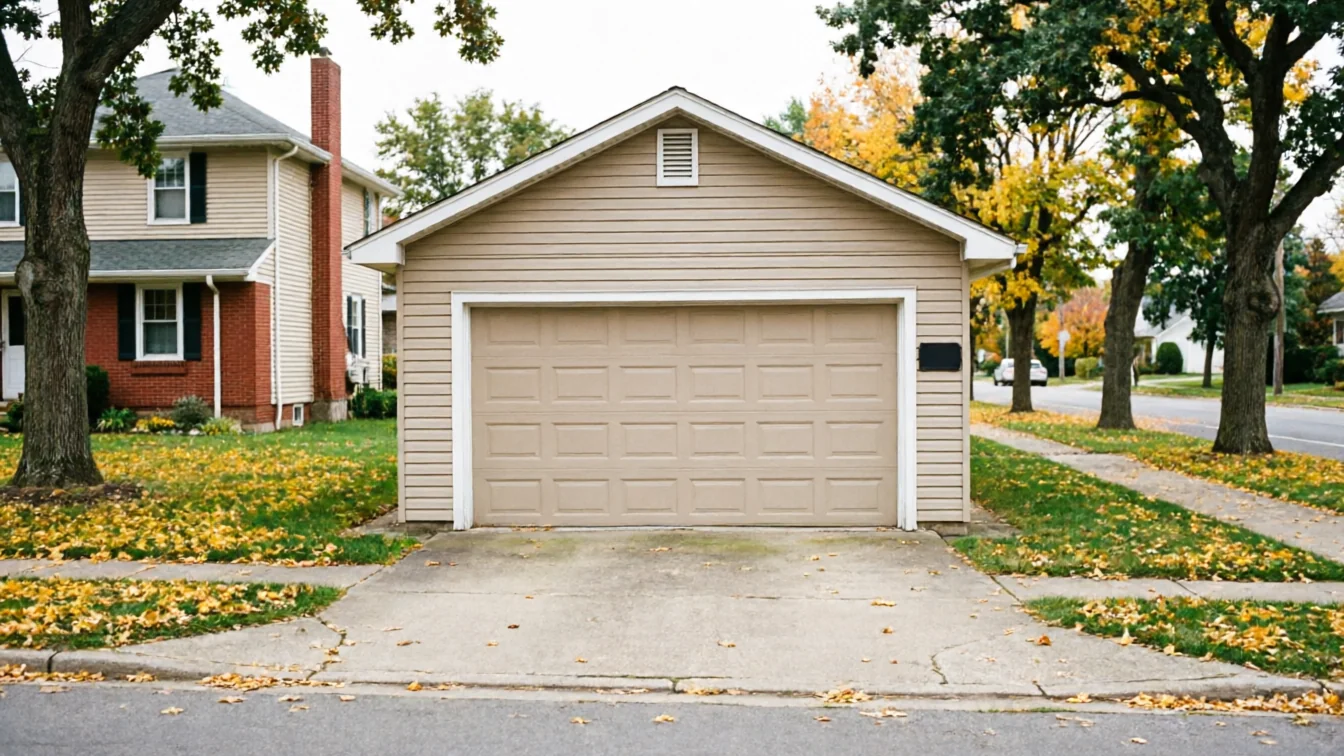
The two setups behave differently. An attached garage shares a wall and often a header with the living space, so the door opening was usually framed to the same standard as the rest of the house. A detached garage from that same 1960s-70s wave was typically framed as its own small structure, sometimes with a shallower header, narrower jambs, or less squared framing than what you'd find today. That affects what hardware fits and how much shimming a new door needs on install.
We also see a split in how doors were hung. Attached garages from this period more often got a torsion spring mounted on a header bracket tied into house framing. Detached structures sometimes used extension springs along the horizontal track instead, because the building didn't have the same header strength. If you're not sure which you have, the springs themselves usually tell you - torsion sits on a bar above the door, extension springs run along the tracks on both sides.
What It Costs
We don't have a price list to quote here, and it wouldn't be honest to make one up. What we can tell you is what tends to drive the difference between a detached and attached job.
A detached garage built in the 1960s or 70s often needs its own dedicated electrical circuit if it never had an opener, since these structures were sometimes wired for a single light and nothing else. An attached garage usually already ties into the house panel, so adding or replacing an opener is more straightforward.
Framing age plays a part too. If a detached garage's header has sagged or the jambs have shifted over fifty-plus years, a new door install may need extra bracing work before the door itself goes in. That's not something we price over the phone - it needs eyes on the opening.
One limitation worth saying plainly: we install and repair doors, springs, openers, and track. We don't do structural carpentry - if a detached garage's frame needs rebuilding, that's a job for a carpenter or contractor first, and the door comes after.
When to Get Help
Call before a problem gets worse, not after the door is stuck shut. On a detached garage, watch for a door that's gotten noticeably heavier to lift by hand - that's usually a spring losing tension, and on these older structures the spring is sometimes original equipment that's simply worn out after decades of cycles.
On an attached garage, pay attention to the door sealing poorly against the frame, especially along the bottom. With housing stock this old, wood jambs can warp slightly over the years, and a door that doesn't seat right there is letting cold air straight into a wall that backs onto living space - something a detached structure doesn't have to worry about in the same way.
Either setup, if cables look frayed, a panel is visibly bent, or the opener reverses before fully closing, stop using it and call. Those aren't maintenance items - they're safety issues, and on an older detached garage especially, the hardware holding things together wasn't built to modern standards.
How Local Conditions Play In
Brunswick sits in a climate band that gets severe cold, and that hits detached and attached garages differently. A detached garage is almost always unheated and unconnected to the house's envelope, so steel parts - springs, rollers, track - sit at outdoor temperature all winter. Lubricant thickens, extension springs lose some give, and a door that worked fine in October can bind or groan by January.
An attached garage gets some residual warmth from the shared wall, which helps, but if the house is from the 1960s-70s wave typical of this area, the door itself is often a thin single-layer steel panel with little or no insulation - original to the build era. That panel transmits cold straight through, and in a severe winter that shows up as condensation on the inside face or a slight give in the panel on the coldest days.
Neither problem fixes itself. A detached garage benefits from springs rated for the swing of temperatures it actually sees, and an older attached door is often a candidate for replacement with an insulated panel rather than endless patching once it starts flexing.
Frequently asked questions
Is a detached garage door harder to repair than an attached one in Brunswick?
Not harder exactly, but older detached garages from the 1960s-70s building wave sometimes have narrower framing or extension springs instead of torsion, which changes what hardware fits. We check the structure before quoting any repair rather than assuming it matches a standard attached setup.
Why does my detached garage door feel heavier in winter?
Cold-band winters here stiffen lubricant and reduce give in extension springs, which are common on older detached structures. A door that lifts fine in summer can feel noticeably heavier once temperatures drop, and that's usually a spring tension issue rather than anything wrong with the opener.
Can you add structural support to an old detached garage before installing a new door?
No - we handle doors, springs, track, and openers, not carpentry. If a detached garage's header or jambs have shifted with age, that framing work needs to happen first, done by a carpenter or contractor, before we install a new door into the opening.
Related garage door services in Brunswick
More garage door guides
Book garage door service in Brunswick
Call now or request a quote - tell us what the door is doing and where you are.